

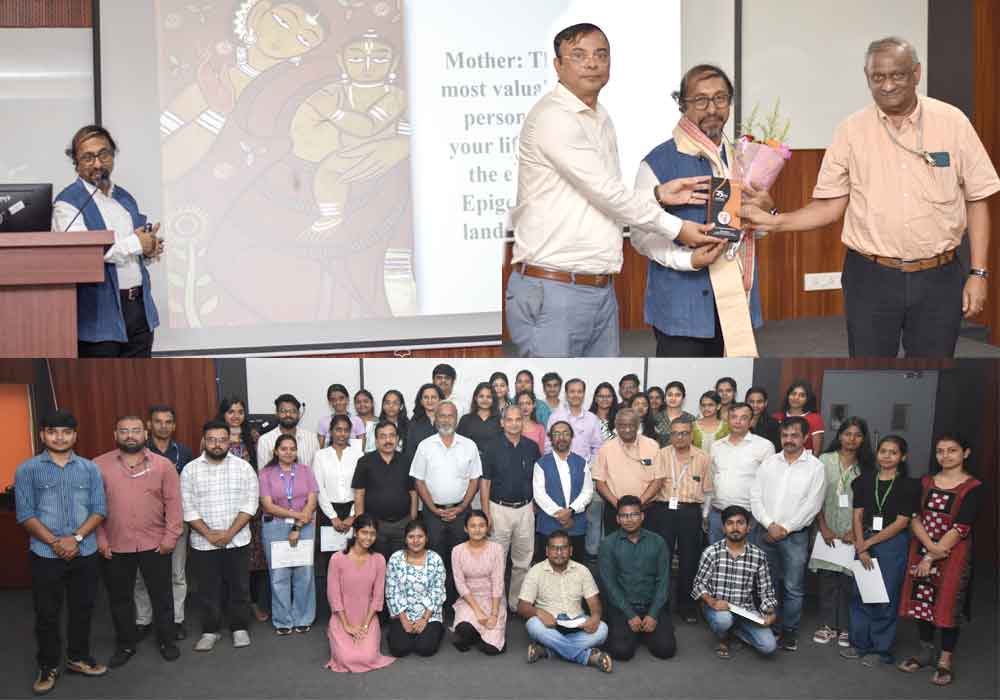
The JBS Haldane Centre for Molecular Medicine at Silicon University, organized two parallel three-day workshops on ‘Epigenetics & Disease Biology and Gene Therapy & Gene Editing’ from 15–17 April 2026.
The programs brought together students, faculty members, and external participants to explore recent advances in molecular medicine through keynote lectures, expert talks, hands-on training, assignments, and laboratory exposure. Designed to bridge fundamental concepts with emerging biomedical technologies, the workshops provided participants with a comprehensive understanding of contemporary research and clinical applications in the fields of epigenetics, gene therapy, and genome editing.
The sessions were inaugurated by Prof. Biren Banerjee, Head of the JBS Haldane Centre for Molecular Medicine at Silicon University, who welcomed the participants and highlighted the growing significance of molecular medicine in addressing complex health challenges. The workshops featured keynote addresses by Prof. Tapas Kumar Kundu, Professor, Jawaharlal Nehru Centre for Advanced Scientific Research (JNCASR) and Former Director, CSIR–Central Drug Research Institute (CSIR-CDRI), Lucknow, on the epigenetic basis of life and epigenetics and an enriched ecosystem for a disease-free life, and by Dr. Arkasubhra Ghosh, Chief Scientist and Director, GROW Research Laboratory, on recent trends in gene and cell therapy in India. Expert sessions by Dr. Ruthrotha Selvi Bharathavikru, Dr. Rahul Modak, Dr. Barun Chatterjee, and Dr. Anuprita Ghosh further enriched the sessions through discussions on diabetic kidney disease, infection-associated epigenetic changes, gene therapy workflow, CRISPR-Cas9 technology, and the psychosocial dimensions of genetic counselling.
In addition to the lecture sessions, participants engaged in practical learning through workshop assignments, hands-on training in vector construct design, CRISPR gRNA design and validation, gene therapy vector production and purification, vector titre determination, and transduction analysis. Participants of the Epigenetics & Disease Biology workshop also visited inDNA Life Sciences Pvt. Ltd., gaining first-hand exposure to advanced research infrastructure and laboratory practices. These activities enabled participants to strengthen their understanding of modern molecular techniques and their applications in biomedical research.
The workshops concluded with interactive discussions followed by a formal vote of thanks delivered by Prof. Biren Banerjee, who expressed appreciation to the resource persons, organizers, and participants for their valuable contributions. Together, the two programs attracted eighty participants, with each workshop attended by forty participants, including students, faculty members, and external delegates. The workshops served as an effective platform for knowledge exchange, practical learning, and interdisciplinary collaboration, reinforcing Silicon University’s commitment to excellence in education and research in molecular medicine.