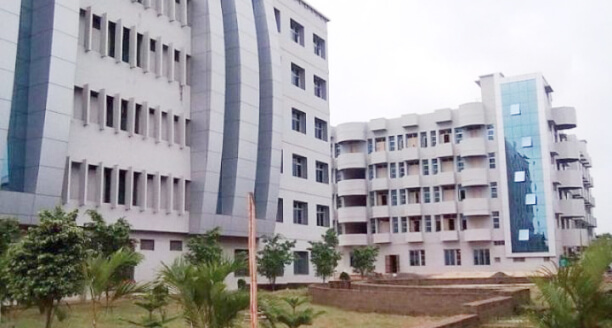


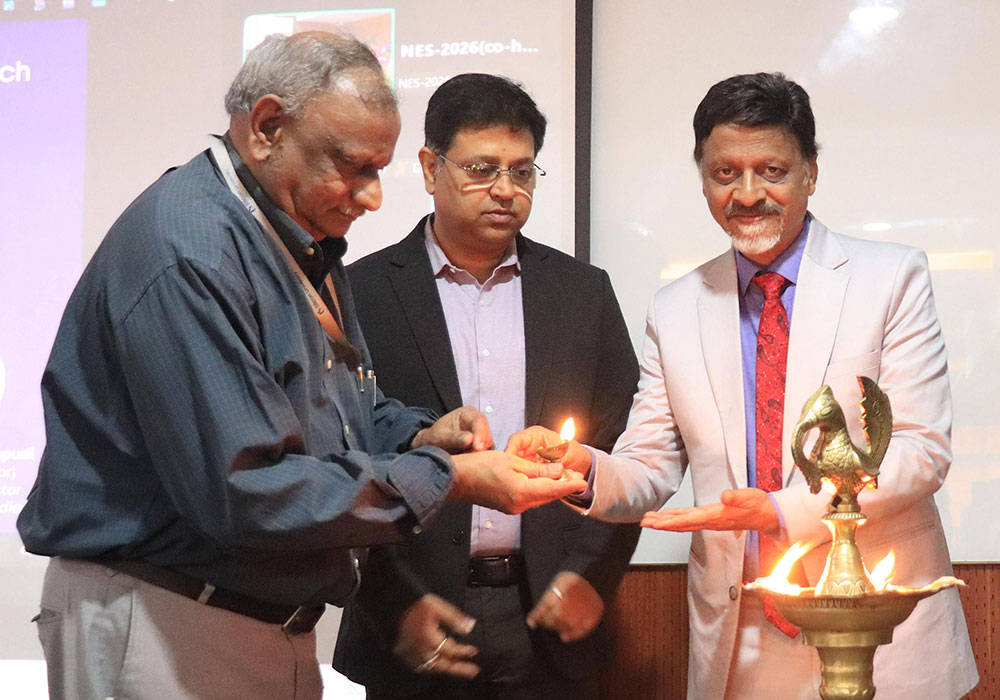
The Department of Electronics Engineering at SiliconTech, the engineering institute of Silicon University, successfully organized the 7th edition of its VLSI summit, Nanotechnology and Embedded Systems (NES 2026), on 30 and 31 January 2026 in partnership with the VLSI Society of India (VSI) and Sevya Multimedia.
NES 2026 was designed with clear objectives to connect academic learning with industry practice, enhance practical and technical skills, and strengthen career preparedness among students. The summit particularly targeted second and third-year undergraduate students in electrical and electronics disciplines and recent graduates, while also providing value to faculty members through exposure to emerging technologies, hands-on workshops, and expert perspectives on research and teaching in VLSI and embedded systems. By blending keynote lectures, panel discussions, invited talks, and practical workshops, the summit aimed to provide a comprehensive platform for knowledge exchange, skill development, and industry engagement.
The summit brought together industry leaders, academicians, faculty members, students, and recent graduates to discuss the latest developments in VLSI and embedded systems while promoting career awareness and technical readiness. The inaugural session featured a welcome address by Dr. Jaideep Talukdar, Vice Chancellor of Silicon University, and addresses by Shri Manas Ranjan Panda, Jurisdictional Director and Scientist ‘G’ at Software Technology Parks of India (STPI), Dr. Satya Gupta, President of VSI and Founder & CEO of EPIC Foundation, and Mr. Narasayya Donepudi, Founding Director of Sevya Multimedia. Their combined expertise in policy, semiconductor technology, and entrepreneurship set the stage for an impactful two-day summit.
The summit featured high-value sessions across two days. On 30 January, participants attended a keynote lecture by Prof. Harpreet Singh Jattana, a distinguished expert in CMOS process development, VLSI design, and space-qualified electronics, followed by a panel discussion moderated by Mr. Atul Bhargava with panelists Mr. Alok Mishra, Mr. Narasayya Donepudi, Dr. Satya Gupta, and Mr. Puneet Mittal. Invited talks further strengthened the summit, with insights into DRAM engineering, CAD automation, analog/RF design, and structured skill development in semiconductor education. The second day focused on hands-on workshops, including CMOS Standard Cell Library Development led by Dr. Santunu Sarangi, Soumya Biswal, and Mahesh Uppathi, and an RTL-to-GDS workshop using the open-source LibreLane toolchain led by Mandava Gupta and Lakshmi Narayanan. These sessions allowed participants to translate theoretical knowledge into applied design skills.
NES 2026 reflected Silicon University’s ongoing commitment to building a robust semiconductor and embedded systems ecosystem in Odisha. As the seventh edition of the summit, it combined technical depth, practical training, and academic outreach while fostering collaboration between academia and industry. By providing exposure to cutting-edge developments, applied workshops, and expert guidance, NES 2026 not only enhanced students’ learning and career readiness but also strengthened faculty development and future industry collaborations, reinforcing the university’s role as a center of excellence in VLSI and embedded systems education.