


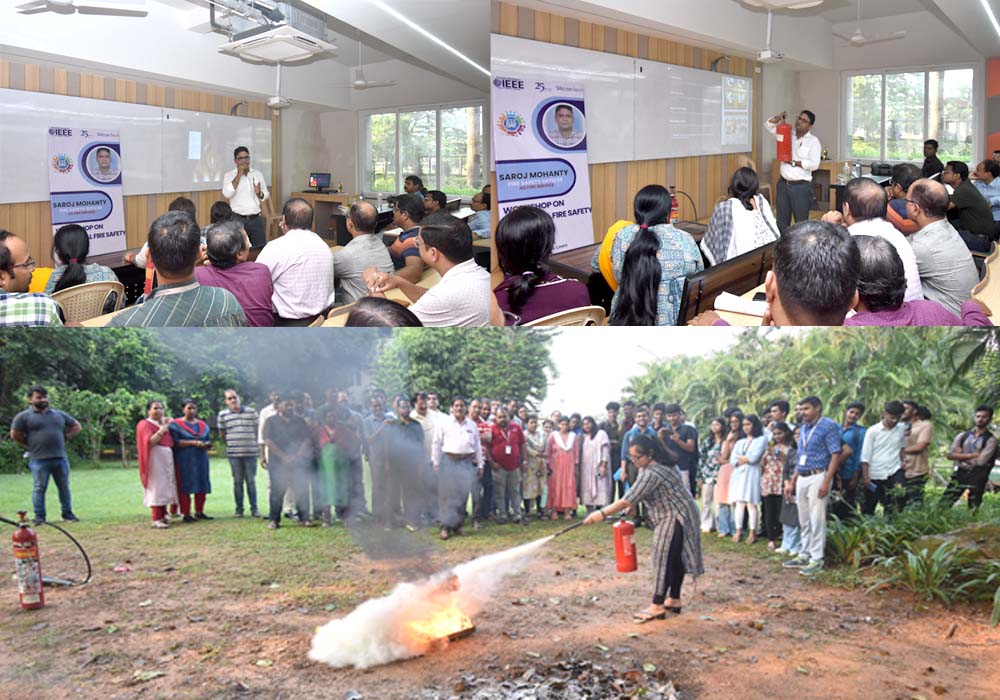
The Department of Electrical and Electronics Engineering (EEE) at SiliconTech, the engineering institute of Silicon University, in collaboration with the student chapters of the Institute of Electrical and Electronics Engineers (IEEE), IEEE Power & Energy Society (PES), and IEEE Transportation Electrification Council (TEC) organized a workshop on electrical fire safety on 11 October 2025 to celebrate the IEEE Day.
The objective of the workshop was to provide participants with comprehensive knowledge and practical skills to handle electrical fire hazards effectively. The workshop aimed to help attendees understand the common causes of electrical fires, learn preventive measures to minimize risks, educate on safe response techniques during a fire emergency, offer hands-on experience with fire extinguishers, and promote inclusive evacuation practices for individuals with diverse needs. By addressing these objectives, the workshop aimed to equip participants with the necessary tools and confidence to respond appropriately in the event of an electrical fire.
The session was conducted by Mr. Saroj Mohanty, Fire Safety Officer at AD Fire Service, who shared his extensive expertise on electrical fire risks. Mr. Mohanty discussed common causes of electrical fires, including short circuits, overloading, and faulty wiring. He emphasized the importance of routine maintenance and inspection of electrical systems to avoid fire hazards. Additionally, he provided a detailed overview of fire classifications, with a particular focus on Class E electrical fires. The proper handling of electrical fires using CO2 or dry powder extinguishers was stressed, and participants were informed never to use water on electrical fires.
A key part of the workshop was the practical demonstration on the use of fire extinguishers. Mr. Mohanty walked attendees through the PASS technique (Pull, Aim, Squeeze, Sweep), offering hands-on practice with extinguishers. Participants were shown how to manage small controlled fires safely, reinforcing the importance of staying calm and following the correct procedures. The workshop also covered evacuation strategies, focusing on clear exit routes, safe assembly points, and the need for effective communication during an emergency. Special emphasis was placed on inclusive evacuation practices for people with disabilities, ensuring that everyone could safely exit in case of a fire.
The workshop attracted 109 attendees, including 89 faculty members and 20 students, all eager to gain insights into fire safety protocols. It concluded with discussions on alarm systems and emergency communication. Mr. Mohanty introduced the use of pre-defined code words, such as ‘Code Red – Electrical’, to ensure quick and clear alerts without causing panic. The session also highlighted the importance of conducting regular fire drills to familiarize participants with emergency procedures and help ensure a smooth evacuation. Attendees left with a deeper understanding of electrical fire safety, having gained both theoretical knowledge and practical skills.